
What to Do in the First 60 Seconds of a Cardiac Emergency
First 2 Aid Inc. · August 1, 2026
Placeholder content — this post is a placeholder used to test the blog template and will be replaced with real content from First 2 Aid Inc.
The first minute after someone collapses is the most important window you'll ever act in. Here's what a trained responder does, in order.
1. Check the scene, then check the person
Before you approach, make sure the area is safe. Then tap the person's shoulders and shout to see if they respond. No response, no normal breathing — treat it as cardiac arrest.
2. Call for help immediately
Call 911 (or have someone else call) before you do anything else. If a bystander is nearby, point directly at them and assign the task: "You, call 911 and find an AED."
"The few seconds it takes to get help on the way can matter more than anything you do next."
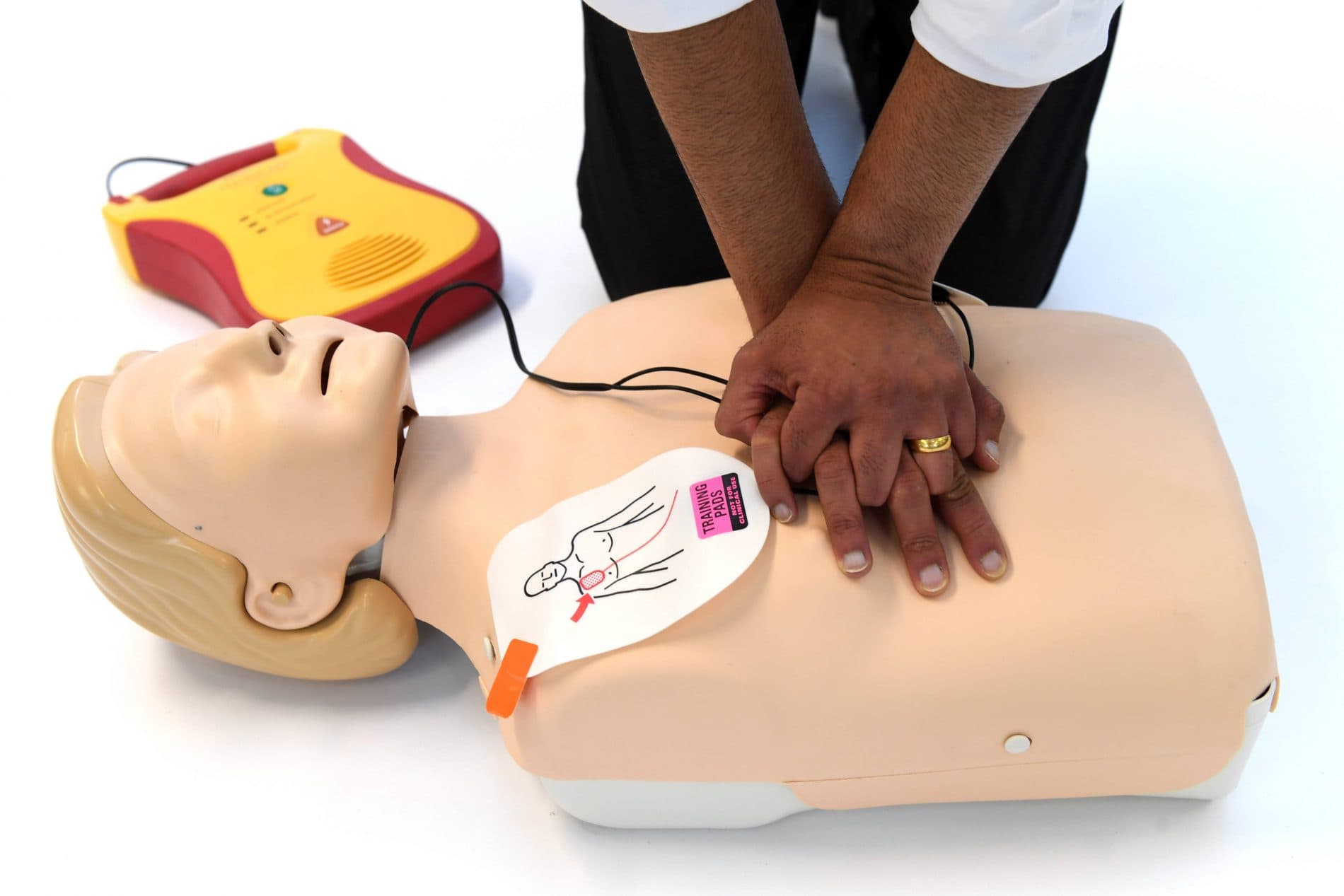
3. Start hands-only CPR
Push hard and fast in the center of the chest, about 100–120 compressions per minute. Don't stop until paramedics arrive or an AED is ready to analyze the heart rhythm.
4. Use an AED as soon as one arrives
Modern AEDs talk you through every step. Turn it on and follow the prompts — it will tell you if a shock is needed.
Hands-only CPR is a skill that fades without practice. Our in-person CPR and AED courses give you real repetitions on a manikin so the motion becomes automatic under pressure.